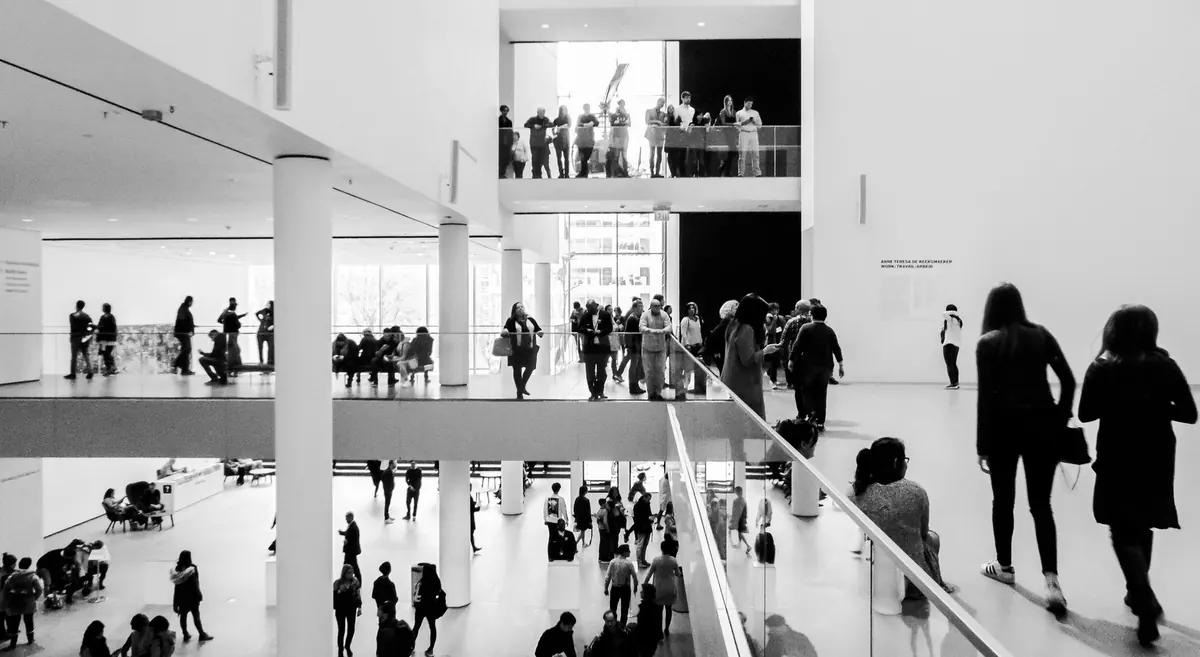
Free culture in the UK is rarely hidden. It is usually just badly advertised. A gallery runs a late opening on the first Thursday of the month; a library hosts a folk trio on a Tuesday; a council publishes a summer programme in a newsletter almost nobody reads. The events happen anyway.
Finding them takes less effort than most people assume. It is not about hunting harder, but about knowing the dozen or so places where these things get announced — and checking them on a slow Sunday afternoon once a month.
Start with the library card you probably already have
Library membership is free in every UK nation, and it buys more than books. Most library services run author events, film screenings, reading groups, craft sessions, digital skills drop-ins and school-holiday activities, nearly all of them free. They also publish their own programme, which is often more varied than the council's main what's-on page.
The desk staff are the best source of information in the building. Ask them directly:
- Whether the library lends out passes or discount vouchers for local museums, theatres or heritage sites — some councils do this, and the schemes differ from place to place.
- Which regular groups meet on site, and whether they welcome new members mid-term.
- Whether there is a local studies or reference section, which often hosts free talks from historians and community groups.
- When the notice board is updated — plenty of what is pinned there never appears online.
If your council runs more than one library, check the others. A branch in a different neighbourhood may run a completely different programme, and the smaller ones are sometimes the livelier.
Check which museums are free before you pay
Most national museums in England, Scotland, Wales and Northern Ireland offer free entry to their permanent collections, funded centrally rather than through ticket sales. That covers large institutions in London, Edinburgh, Cardiff, Belfast, Liverpool and elsewhere, and it includes the obvious big names. Temporary exhibitions usually cost money; the rooms next door often do not. Donation boxes are there for a reason, so give something if you can.
Smaller museums are worth a look too. Volunteer-run local and industrial museums often charge very little, and many waive entry on certain days or for residents of the area. Ring ahead and ask rather than relying on the website, which is sometimes years out of date.
Two things to look for on any museum's site: late openings, which are frequently free or cheaper, and community or access tickets, which some venues release quietly to local residents, students or people on certain benefits.
Read your council's pages properly
Councils publish a great deal, and culture gets squeezed into corners of the website. Look for sections labelled what's on, arts and culture, parks and open spaces, leisure and community, then sign up for the newsletters attached to them. It takes a minute and means the information arrives without you searching for it.
Widen the net beyond the council itself. Town and parish councils, community centres, tenants' associations, leisure centres, places of worship and even GP surgeries carry posters for things that never make it online. The notice board by a supermarket entrance does more for local culture than most listings sites.
Free council-run culture clusters around a few reliable formats: bandstand concerts in parks, summer festivals, guided walks, seed swaps, and open days at depots, allotments and civic buildings. Most of it lands between May and September, so start checking in spring.
Use the listings that reward a filter
Most listings sites are cluttered, but a few minutes with the filters makes them useful. These are the ones worth bookmarking — and they work best in combination rather than on their own.
- Your local paper's what's-on section. Reduced from what it once was, but still the only place some community events appear.
- Venue mailing lists. Pick four venues you like — a theatre, an arts centre, a gallery, a music hall — and subscribe to each. This is the single most reliable method.
- Eventbrite and Meetup, filtered to free. Set your city and a date range, then ignore anything that is really a sales pitch.
- Regional culture sites. Scotland has The Skinny; other areas have their own equivalents worth tracking down.
- Neighbourhood groups. Local Facebook groups, Nextdoor and city subreddits are messy but fast, and they catch what official channels miss.
- University events pages. Public lectures, exhibitions and concerts are usually free and open to anyone, not just students.
Culture that does not advertise itself
Some of the best free events barely present themselves as events at all. Lunchtime concerts in churches and cathedrals, often half an hour long with a retiring collection. Public lectures at universities and museums. Guided walks led by civic societies and volunteer groups. Open days at studios, mosques, synagogues, temples and fire stations.
Heritage open days and their equivalents
Every September, thousands of buildings that normally charge or stay closed open their doors for free: Heritage Open Days in England, Open Doors in Wales, and Doors Open Days in Scotland. Volunteers run them, and the programmes include private houses, masonic halls, waterworks, recording studios and railway signal boxes. Book early for the popular ones — many are ticketed even though entry is free.
When the only ticket has a price on it
Plenty of venues are more flexible than their box office suggests. Ask about pay-what-you-can and pay-what-you-decide nights, free previews before a run opens, community tickets for residents, concessions that are not advertised, and ticket ballots for under-26s or local people. Some theatres hold back a handful of cheap seats for each performance.
Volunteering is another route in. Stewarding, front of house, flyering or helping at a festival usually gets you inside without paying, and it puts you in a room full of people who know what is happening next week.
Turn it into a routine rather than a search
None of this works if you only look when you are already bored on a Saturday. Ten minutes a month is enough. Follow four venues and two listings, note dates in your phone the moment you see them, and book free tickets the day they are released — free events fill up faster than paid ones, because the cost of saying yes is nothing.
Say yes to things slightly outside your usual taste. A lunchtime recital, a local history talk in a church hall, a walking tour of a street you have walked down a thousand times. If it is free and sounds about seventy per cent interesting, go. That is how the shape of a city starts to make sense, and it costs nothing but an evening.
Photo: Bjorn Pierre / Pexels